
Scullery vs. Butler’s Pantry


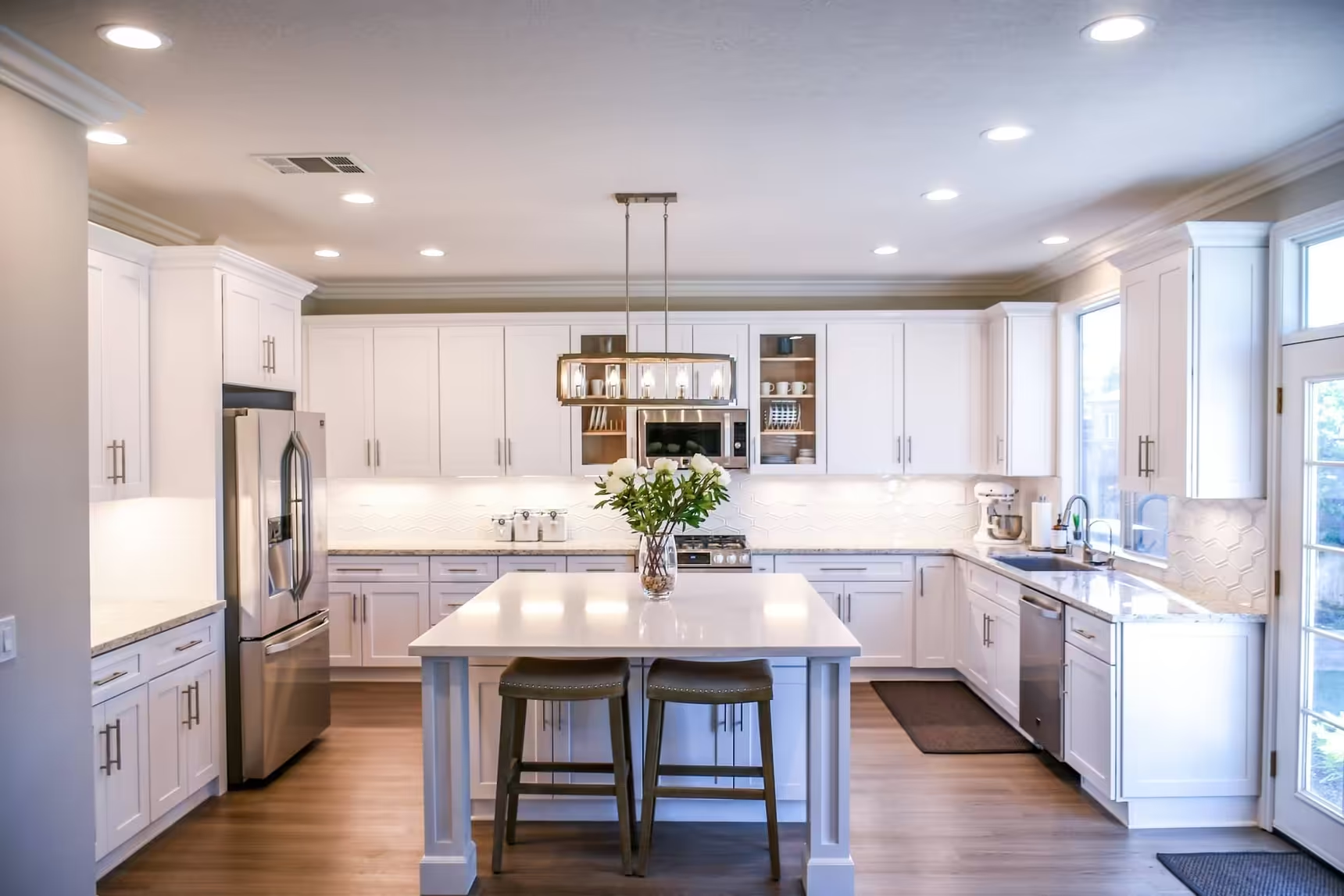
Photo from the Poteet Homes Mahoney Plan gallery.
A scullery is a room off the kitchen where you can prep and wash up. It gives you a spot for the big pan and the stack of dirty plates. A butler’s pantry holds the dishes you serve from. It can also give you a place to pour drinks or set out food. A walk-in pantry gives you shelves for the food and gear you use to cook.
Think of the last time you had friends over. If dirty plates filled the counter where you meant to serve pie, a scullery could earn its keep. If you just wanted a clear spot to pour coffee, a butler’s pantry may do the job.
Two pantry plans you can walk through on paper
On Poteet’s Farm Home A plan, the room marked “Butler’s Pantry” sits next to the breakfast booth. A guest can get milk from the pantry fridge and take it to the table in a few steps. If you want to wash serving platters there too, look for a sink and a spot to set them down. Farm Home A plan
The Mahoney plan has a 10-by-5-foot pantry. You can store food and good china on its shelves. To wash a platter, you’d take it to the sink in the kitchen island. Want to wash up in the pantry itself? You’d need pipes, a sink and a spot to set the platter down. Mahoney plan
How much space does a scullery or butler’s pantry need?
Measure between the finished walls. The aisle is the gap left between the fronts of the shelves or counters.
In a room 7 feet wide, put a counter 25 inches deep on one wall. What goes on the wall across from it?
| Across from the counter | Space left to walk |
|---|---|
| A shelf 12 inches deep | 47 inches |
| A second counter 25 inches deep | 34 inches |
How wide should the aisle be for one cook or two?
The National Kitchen & Bath Association suggests 36 inches for a walkway. Where you’ll stand to prep or wash up, it suggests 42 inches for one cook and 48 inches for two. NKBA planning guide
In our seven-foot room, the shelf leaves space for one cook. With a counter on each wall, the gap is too tight even for the suggested walkway. Mark the handles and open dishwasher door on your plan. Where will you stand to load a plate?
What appliances go in a scullery?
For cleanup, start with the sink and dishwasher. Trace the path of a dirty plate. Can you set it down, scrape it and slip it into the rack? Where will you put it when it’s clean? A second dishwasher does less for you if every clean plate has to go back across the house.
For coffee, think of the mugs, the tap and the used grounds. For baking, try lifting the head on your mixer where you mean to use it. Draw the door of the spare fridge as it swings out. Can someone still get past you with a tray?
Will two people cross paths here?
Before you sign off on the plan, trace three trips. Bring food home from the store. Carry a hot dish to the table. Take dirty plates back while a guest pours the coffee. Where do two paths cross? That’s the spot to look at twice.
More Blogs
