
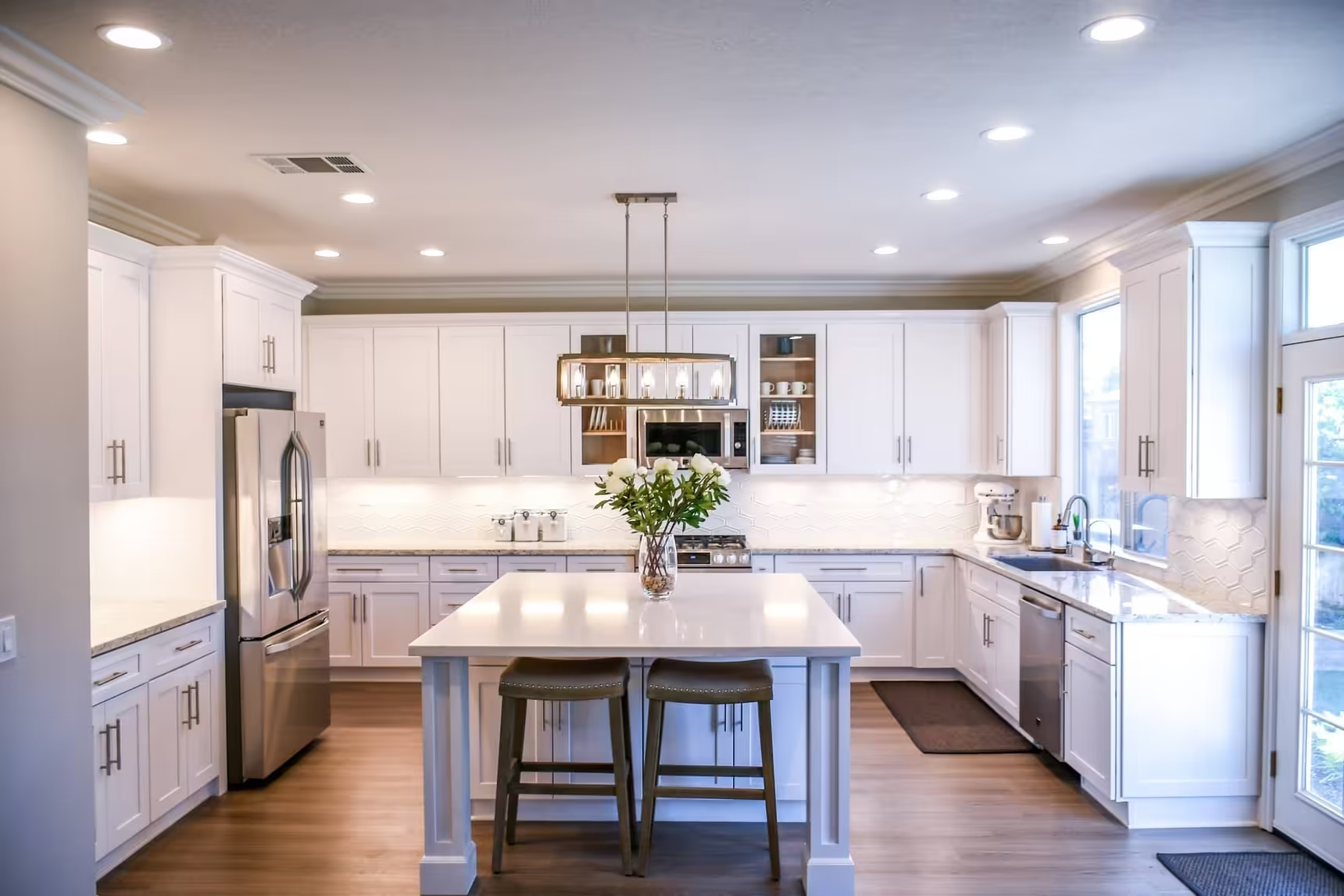

Photo from Poteet Homes' Live Oak Ranch gallery.
Choosing a Custom Home Builder in San Antonio: Questions to Ask Before You Sign

A beautiful finished home can get a builder onto your shortlist. The next conversation should help you understand how that builder will manage your home, your money and the decisions between the first drawing and the final walkthrough.
When choosing a custom home builder in San Antonio, begin with the information already available: project photos, floor plans and reviews from previous clients. Use those materials to narrow your shortlist, then focus your builder conversation on the details that matter for your home.
You do not need to ask every question below at once. For a first conversation, bring your location, approximate home size, budget range and two or three priorities. Use the more detailed questions when you are reviewing a proposal and preparing to sign.
1. Who will be responsible for this project?
“Which business will sign the agreement, and who handles the local requirements?”
Confirm the legal business name on the proposal, agreement and payment instructions. Ask who will obtain the permits and arrange the inspections for the actual property. The answer should fit the project location, not just its mailing address.
For new residential construction in the City of San Antonio, the city's Residential Building Contractor registration is the relevant local registration. Use the city's contractor lookup guidance to check the business you are considering.
Texas does not issue a statewide general-contractor license, according to the state's business licenses and permits guide. Local registration and separately licensed trades are different matters. Ask what applies to your home, and verify it with the responsible authority.
“What insurance covers the work, and what is my responsibility?”
Before signing, review the builder's standard insurance information. Clarify coverage for the work and any insurance you need to arrange, including responsibility for a builder's risk policy during construction.
Have your insurance professional help you understand the proposed arrangement. Registration alone does not answer all of these questions or establish the quality of the builder's work.
2. Can I see how you handle a home like mine?
“Which examples are most relevant to my plan, site and budget?”
Browse the builder's published gallery and plans. Save one or two examples that appeal to you and note the features you like, such as the layout, porch or level of finish. These give the conversation a concrete starting point.
Use the proposal for your own home to understand what is included and what it will cost. A photograph can help you describe a preference, but it does not establish a construction price or show whether the same design fits your property.
“Can I see reviews from previous clients?”
Start with Poteet Homes' Google reviews. Look for specific comments about communication, how changes were handled, the finished home and follow-through after move-in.
Read several reviews to look for patterns rather than relying on a single comment. Reviews add useful context; the proposed scope, agreement and warranty still deserve a careful review before you sign.
3. What exactly does this proposal include?
“Which plans and specifications does this price cover?”
Review the plans, specifications and exclusions supplied with the proposal. Check the plan version, living and covered areas, and the scope for site work, foundation requirements, utilities, design, engineering and applicable fees. Clarify any items that are not already identified as included, an allowance, excluded or still unpriced.
When comparing proposals, keep the inputs consistent. A lower total for a different window package, smaller porch or excluded utility extension is not a lower price for the same project. Our San Antonio home-building cost guide explains how to compare the budget's scope.
“How do allowances, price changes and payments work?”
Ask what each allowance buys, whether labor and tax are included, and how credits or overages are calculated. Confirm whether pricing is fixed, cost-plus or another arrangement, along with the fees and records relevant to that structure.
Have the payment schedule explained in plain language. Ask what work or documentation supports each payment, how it coordinates with a construction lender if you have one, and how lien-related paperwork is handled. If the agreement is unclear, get independent professional advice before signing it.
Use the documents already provided
| If you hear… | Where to look |
|---|---|
| “That is included.” | The specification or scope line that defines it. |
| “You can choose it later.” | The allowance, selection deadline and effect on ordering. |
| “We will work it out as we go.” | The agreement's process for approving cost and time changes before work proceeds. |
4. Who will I work with during construction?
“Who supervises the site, and who answers my questions?”
Confirm who handles day-to-day supervision, who your usual point of contact will be and how project decisions reach the right person. When reviewing the proposed schedule, clarify the team's availability for your home.
Discuss how communication will work during your build, including the builder's usual process for planned site visits. A friendly sales conversation is a start; you also need to understand the relationship you will have while construction is underway.
“What will a normal project update tell me?”
Ask about the builder's usual update method and frequency. If an existing sample is available, it can help you understand how updates cover completed work, the next milestone, choices due and changes to cost or timing.
Agree on how approvals will be documented. A conversation on site can help resolve a question, but a change affecting the project should leave a written record both sides can refer to.
5. What needs to happen before the estimated dates?
“What does your estimated start date depend on?”
Ask whether the schedule begins at signing, permit issuance or the actual start of construction. Discuss the plans, financing, approvals, site work and selections needed before that date can hold.
For a San Antonio project, a short initial city review does not describe the full permitting period. Ask who tracks comments, revisions and outside dependencies. Our custom-home timeline guide separates those stages.
“How will a change affect the price and completion forecast?”
Ask to see the change-order process. It should make the requested work, price effect, schedule effect and approval clear before the change proceeds.
Review the builder's usual approach to unavailable products, including approval of a substitute and any price difference. Clarifying the process before construction helps both sides handle a later change.
6. What happens at the end of the build?
Ask how the walkthrough, remaining work and final payment are handled. Find out which documents you receive, how any required final approvals are confirmed and when the builder considers the home ready for occupancy.
Request the written warranty terms and service procedure before signing. Distinguish the builder's commitments from manufacturers' warranties. Ask how to report a concern, who responds and how to handle an urgent issue after move-in.
Clear answers here matter as much as the finish selections. Your relationship with the builder includes the handoff and the responsibilities that continue afterward.
Compare the answers side by side
Place the written proposals next to each other and check the same details in each. Use the guide below to spot differences worth discussing before you decide.
The details behind the decision
| What to compare | What a clear answer includes |
|---|---|
| Business and coverage | The business signing the agreement, applicable registration and evidence of the proposed insurance coverage. |
| Plans and scope | The plan version, specifications, living and covered areas, included work and written exclusions. |
| Allowances and payments | What each allowance buys, how price differences are handled and what supports each payment. |
| People and updates | A named site contact, supervision responsibilities and an agreed method and frequency for updates. |
| Dates and changes | Start-date assumptions, selection deadlines and a written process for approving cost and schedule changes. |
| Handoff and service | The walkthrough process, handling of remaining items, written warranty terms and a way to report concerns. |
A builder does not need an instant answer to every site-specific question. A useful response identifies what remains unknown, who will investigate it and when it can be resolved. Repeatedly vague answers about scope, payment or responsibility deserve follow-up before you make a commitment.
Before you sign
Read the agreement alongside the final plans, specifications, allowance schedule and payment terms. Confirm that the commitments you relied on during the interview appear in the written documents. Keep copies of the agreed versions.
If you already have property, bring its location into the conversation early. The own-land building guide can help you bring the relevant site information to the interview.
Start with your project
Tell Poteet Homes where you plan to build, the kind of home you have in mind, your budget range and your top priorities. Those details help the first conversation focus on fit and the next useful step.
Start a builder conversation
